A landmark challenge asks whether a driver's refusal to take a voluntary field sobriety test can be used against them as evidence of guilt, and the answer could reshape DUI law across the islands.
Published June 2, 2026 · Legal Affairs
When a Hawaii driver is pulled over on suspicion of drunk driving and an officer asks them to perform a roadside sobriety test, they have the legal right to say no. But in a twist that defense attorneys call deeply unfair, that very refusal can then be wielded against them in court, treated as a sign that they knew they were guilty. That is the legal paradox now before the Hawaii Supreme Court, and the attorney leading the challenge is Kevin O'Grady.
The state's high court heard oral arguments Thursday in a case that could significantly change how DUI proceedings work in Hawaii. At its core, the case asks a deceptively simple question: if a test is truly voluntary, can declining to take it be treated as evidence of wrongdoing?
Kevin O'Grady
Honolulu-based defense attorney with over 25 years of experience, specializing in DUI/OVUII, criminal defense, and appellate law. A member of the National College for DUI Defense and the Hawaii Association of Criminal Defense Lawyers, O'Grady has previously argued before the Hawaii Supreme Court and the U.S. Supreme Court. He is a U.S. Army Officer and Judge Advocate currently serving in the Army Reserves.
A System O'Grady Calls Fundamentally Unjust
O'Grady is representing the appellant in the case, Marvin L. Thedford (Case No. SCWC-23-0000079), before a panel that includes Acting Chief Justice McKenna, Justice Eddins, Justice Ginoza, and two specially assigned circuit judges.
"Right now, the court is allowed and hearings officers are allowed to take a person's 'no' to perform a voluntary test and use it as a presumption that the person is guilty."
— Kevin O'Grady, Attorney for the Appellant
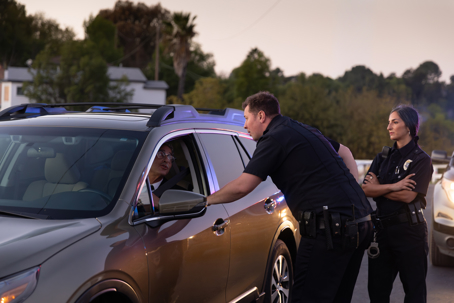
The Standardized Field Sobriety Test (SFST) — which consists of the one-leg stand, the walk-and-turn, and the horizontal gaze nystagmus eye test — is administered roadside and is explicitly voluntary under Hawaii law. Yet body camera footage obtained by HNN Investigates shows that drivers who declined were immediately ordered out of their vehicles and arrested. Afterward, the fact of their refusal was used in administrative license revocation hearings as circumstantial evidence of "consciousness of guilt."
O'Grady argues this creates a constitutional violation. Refusing to participate in a voluntary test, he contends, should be treated no differently than a person exercising any other legal right — and silence or refusal cannot fairly be read as an admission of guilt.
Why Drivers Decline — And Why That Matters
A central piece of O'Grady's argument is that there are countless legitimate, innocent reasons a person might decline to participate in the SFST, none of which have anything to do with impairment.
- A driver may be fatigued after a long shift, affecting physical coordination.
- English may not be their first language, making instruction-following difficult.
- Pre-existing injuries, balance disorders, or medical conditions like bad knees can impair performance.
- Anxiety or nervousness from being stopped by police is itself a performance factor.
- A driver may simply be following the advice of an attorney, which is their legal right.
That last point was highlighted sharply by defense attorney and former Honolulu police officer Jonathan Burge, who noted the logical absurdity of the current standard: if an attorney advises a client not to take the test and the client follows that advice, a court can then treat that compliance with legal counsel as evidence of guilt.
Defense attorney and former deputy city prosecutor Victor Bakke put it in even starker terms, describing the situation drivers face as a no-win trap: fail the test and it gets used against you; refuse the test and that refusal gets used against you too.
The Constitutional Core of the Challenge
The ACLU of Hawaii joined O'Grady's challenge, lending additional constitutional weight to the argument. ACLU attorney Emily Hills, who presented oral arguments before the court, wrote in the case record that the matter "raises a significant legal question that could impact the constitutional rights of drivers across Hawaii."
Hills framed the issue in terms of a fundamental right, the right not to assist in one's own prosecution. Whether that takes the form of remaining silent or declining a physical test, she argued, a person's exercise of that right should not be flipped into evidence against them.
A lower court's ruling had permitted the "consciousness of guilt" inference to be drawn from the SFST refusal alone, and it is that ruling that O'Grady and Hills are asking the Supreme Court to overturn.
O'Grady's Track Record on This Issue
This is not new ground for Kevin O'Grady. Long before this case reached the state's highest court, he had been litigating the same principle at the administrative level, and winning.
Years of precedent
O'Grady has won at least a half-dozen administrative driver's license revocation hearings by arguing that a driver's choice to decline the SFST does not constitute evidence of consciousness of guilt.
Prior Supreme Court victories
O'Grady previously argued a laser-speed-gun case before the Hawaii Supreme Court and won, raising the evidentiary standard for such devices. He also prevailed before the court on the right to transcripts in criminal proceedings.
December 2025
The Hawaii Supreme Court accepted the application for writ of certiorari in the Thedford case, setting the stage for Thursday's oral argument.
June 5, 2026
Oral arguments heard before the Hawaii Supreme Court. A ruling is expected in the coming months.
What a Ruling Could Mean for Hawaii Drivers
The stakes extend well beyond a single case. If the Hawaii Supreme Court sides with O'Grady and the ACLU, it would establish a statewide precedent barring the use of SFST refusals as evidence of guilt in both administrative license revocation proceedings and potentially in criminal DUI prosecutions.
Importantly, neither O'Grady nor any of the defense attorneys involved are arguing that drunk drivers should escape accountability. The SFST, they acknowledge, serves a legitimate investigative purpose, and many drivers do consent to take it. The argument is narrower: that the decision not to participate in a voluntary test is a legally protected choice and should be treated as such, not converted into a presumption of wrongdoing.
As O'Grady told Hawaii News Now, people decline for many reasons, fear, physical limitation, language barriers, or simply because they know their rights. None of those reasons are the same as guilt. The Supreme Court will now decide whether the law should treat them that way.
Case No. SCWC-23-0000079 · Thedford v. Administrative Director of the Courts, State of Hawaiʻi.
Want to understand how this case could affect your rights during a DUI or OVUII investigation in Hawaii? Read the full article to learn more about Kevin O'Grady's challenge before the Hawaii Supreme Court and what a ruling could mean for drivers across the state. Read the full article here.